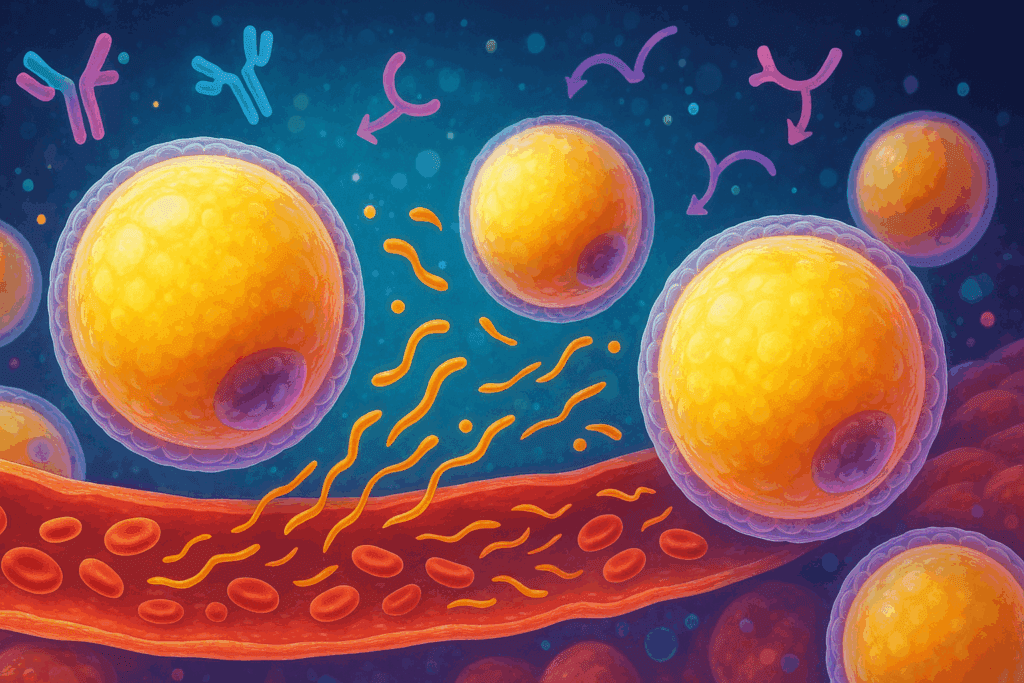
Melting Fat: Where Does It Go?
The Role For Adipose Tissue In Weight Reclaim After Fat Burning
E, f, Family member cell kind abundance in omAT per condition and cells benefactor of the LTSS (e) and MTSS (f) research study. And L.C.H. executed computer mouse experiments and made collections from mouse tissues. L.C.H. executed try outs human examples and cell culture experiments.- No cosmetic treatment, medical or non-surgical, is planned for weight management.
- The fast WL accomplished by bachelor's degree might also lower or change suppositious mobile memory in the human AT.
- Further evaluation exposed that numerous DEGs in the HCH group were changed during obesity yet recouped after WL in HC computer mice.
- These 2 hormones are extra powerful than self-control, much more effective than self-control, and a real "dieter's problem"!
- Vinegar is popular for its health-enhancing residential or commercial properties.
Our epigenetic evaluation of adipocytes of the very same cells might serve as an explanation of exactly how these alterations in chromatin access can be retained. Certainly, throughout cell types numerous DEGs from Incontinence products the obesity time factor continued to be decontrolled after WL (Fig. 2g, h and Extended Data Fig. 7b, c). Weight-loss is accompanied by a dramatic reduction in the dimension of adipocytes (Fig. 2), which is turned around when weight is gained back (11,13,17-- 19).

Cut & Tag And Atac-- Seq Data Handling And Analysis
A DEG was considered restored if it was no more deregulated in WL cells when compared to controls. Otherwise recovered, we took into consideration a DEG part of a transcriptional memory. Collections recognized as comparable cell kinds (for instance, three clusters of endothelial cells) were combined for DEG quantification yet not differential expression evaluation itself. For human snRNA-seq, just cell kinds for which we obtained a minimum of 30 cells per donor were taken into consideration for the retention evaluation.Differential Analysis Of Hptms And Atac-- Seq
Relevance between T0 and T1 for e-f was computed utilizing combined numerous Wilcoxon tests with Benjamini, Krieger and Yekutieli blog post hoc test for multiple comparisons. A, b, Collection markers made use of for annotating cell clusters in human omAT of the MTSS (left) and LTSS (right) research study. C, d, UMAP visualization representing omAT pools from the MTSS research study (c) and LTSS study (d) coloured by anticipated cell subtypes from the Emont et al. natural AT dataset from White people. Feature stories revealing reference mapping ratings illustrating just how well omAT dataset maps to the Emont et al. dataset.Trafficking of taken in nutrients (glucose, Glu; cost-free fats, FFA; triglycerides, TGs) to and from blood circulation is shown for both postprandial and post-absorptive metabolic states (blue arrowheads). Boosted nutrition clearance minimizes postprandial tours in Glu and TGs and potentiates the postprandial reductions of FFAs, which may also communicate a signal of nutrient deprival to the mind. The minimized metabolic mass, improved metabolic performance and lower thermic impact of food add to the reductions of power expenditure (dotted black lines). A large power void is created between cravings Skin firming creams and expense, and food intake should be cognitively (in people) or powerfully (in animals) restricted to maintain the decreased weight.
The modifications in these hormones directly add to boosted hypothalamic expression of arcuate nucleus (ARC) neuropeptide Y (88-- 92) and agouti-related peptide (91,92), along with decreased expression of proopiomelanocortin (89) (Fig. 1). These modifications are the hypothalamic characteristic of an 'anabolic' state, leading to a positive energy inequality and weight gain. Although the principle that the adiposity signals show both complete stores and the portion of maximal ability loaded follows monitorings in fat burning research studies, it requires to be evaluated much more rigorously.
Fat Cells Have Long-lasting (epigenetic) Memory